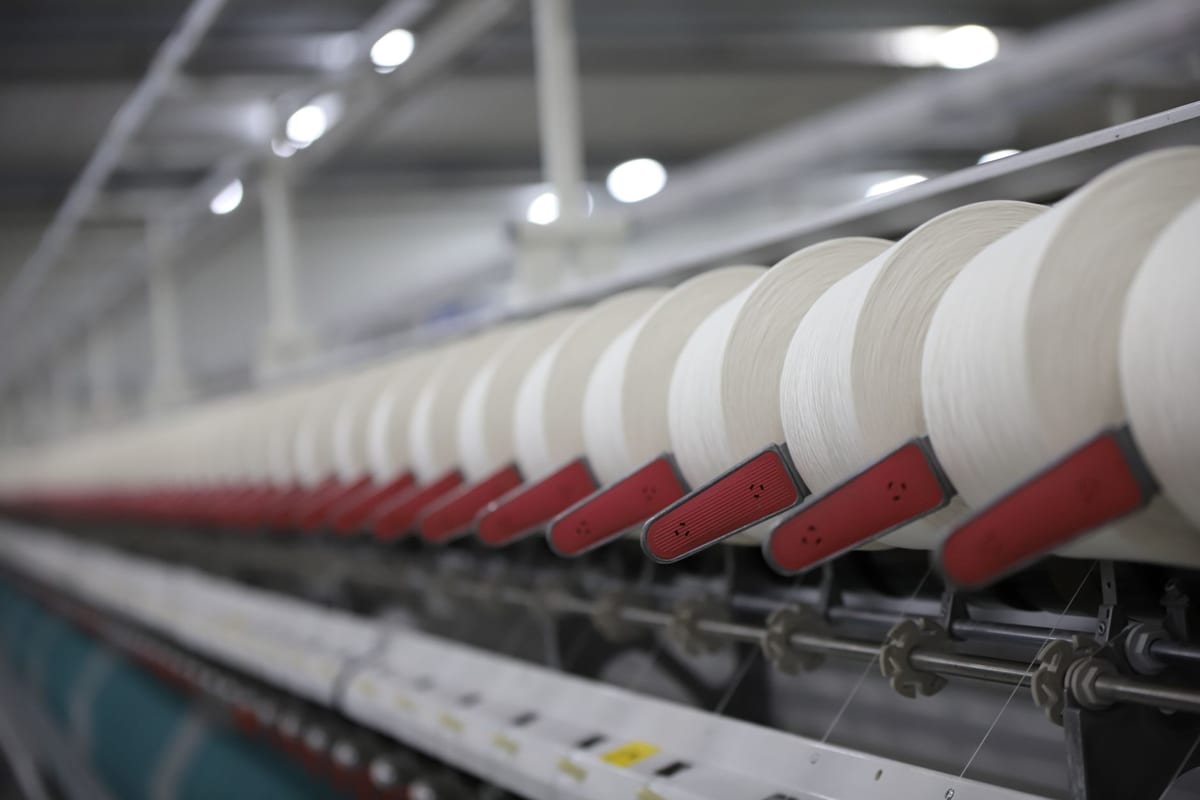
Textile and apparel manufacturing carries a distinctive electrical load. Spinning, weaving, knitting and finishing lines run steady daytime shifts, while dyeing and finishing plant draws heavily for heating, pumping and drying. That produces a strong, predictable daytime baseload that lines up almost perfectly with rooftop solar generation, which is exactly the profile where on-site PV pays back fastest because most of what you generate is consumed on site rather than exported. Many UK textile businesses also operate from heritage mill buildings with large, uninterrupted roof spans, and several sit under sawtooth or northlight roofs that create genuine design and orientation opportunities. Add the rising ESG and provenance expectations placed on UK textile brands, where retail and OEM customers increasingly ask suppliers to report Scope 2 emissions, and solar becomes both an energy-cost hedge and a commercial credential. The complication is that older mills often run on single-phase or capacity-limited supplies, and occasional listed status means the building fabric has to be handled with care, so a textile install is as much a survey and consenting exercise as an electrical one.
Sizing solar for textile and apparel manufacturing
A typical textile or apparel manufacturing installation on our books runs from 150 kW to 500 kW, which is roughly 275 to 920 panels across 900 to 3,000 square metres of usable roof. A system that size generates in the region of 140,000 to 460,000 kWh a year, offsetting a large share of the daytime consumption of a spinning, weaving or finishing operation. Those are ranges, not a quote. The right number for your mill depends on your baseload, your shift pattern, the condition and orientation of the roof and how much of the generation you can use on site.
We do not size from a rule of thumb or from your annual kWh total. We size from 12 months of half-hourly meter data, because that shows us the true shape of your demand across the day, the week and the season. That is what tells us how large an array your site can absorb without exporting cheaply, and it is the foundation of the financial model. Sawtooth and northlight roofs are worth calling out here: their pitched faces let us orient panels for a flatter, longer generation curve, which often improves self-consumption compared with a single flat plane.
Costs and payback
A textile manufacturing PV project typically costs between £115,000 and £450,000 installed, tracking the 150 kW to 500 kW size band. Payback for a representative textile install lands around 7.5 years, though the honest range across UK manufacturing sits between roughly 4.5 and 7.5 years depending on your baseload, your tariff and how much of the output you self-consume. Heritage-building and re-roofing work can extend that, which is why we model your specific site rather than quoting a headline figure. We share the full model so your finance director can stress-test it or feed it straight into your own capital-appraisal process.
| Metric | Typical range |
|---|---|
| System size | 150 kW to 500 kW |
| Number of panels | 275 to 920 |
| Usable roof area | 900 to 3,000 square metres |
| Project value (installed) | £115,000 to £450,000 |
| Annual generation | 140,000 to 460,000 kWh |
| Typical payback | Around 7.5 years |
Compliance and regulation
Compliance is where textile mills differ most from a modern industrial shed. Where your building is Grade II or II* listed, Listed Building Consent is likely and early engagement with the local conservation officer is essential. Getting the conservation view before the design is fixed avoids abortive work, and it often shapes where panels can and cannot sit on a heritage roofline. Dyeing and finishing sites bring a second layer: process-effluent handling and steam plant have to be coordinated around the works so production is not disturbed. In many cases a PV retrofit sensibly coincides with re-roofing of an aged mill structure, which we plan as a single programme.
Beyond the heritage angle, the standard commercial rules apply. Rooftop PV on most industrial and manufacturing buildings falls under Permitted Development (Class A, Part 14 of the GPDO 2015), but that cover is lost on listed mills and in conservation areas, and planning permission is needed where panels project more than 200mm above the roof plane. Any connection above 17 kW per phase needs a G99 application to your DNO, and on constrained networks the connection can take 6 to 18 months, so we submit that application early, alongside the structural survey, to start the clock. We design to SPF1981 v3 fire-safety standards, which is now effectively a requirement from most insurers, and install to MCS commercial certification with NICEIC or NAPIT electrical accreditation.
A representative project
Consider a representative former cotton mill running a spinning and finishing operation across a large sawtooth roof. The building is Grade II listed, so the design starts with a conservation-officer conversation and a structural and roofing-condition survey. Twelve months of half-hourly data shows a firm daytime baseload from the finishing line, which supports a 300 kW array of around 550 panels across roughly 1,800 square metres of south-facing sawtooth faces. That system generates in the order of 275,000 kWh a year, most of it consumed on site during production shifts. At a project value near the middle of the band, around £270,000, and with strong self-consumption, the modelled payback sits close to 7.5 years, with the panel warranty running to 25 years well beyond that. The figures here are illustrative and consistent with the sector ranges above. Your own numbers come from your meter data and your roof, not from an example.
Funding the project
Most manufacturers do not fund solar from cash reserves that would otherwise back production-line investment. Solar PV qualifies as plant and machinery, so the Annual Investment Allowance lets a limited company expense the first £1m of qualifying spend at 100 percent, worth up to roughly a quarter of the cost in year-one tax relief. Larger textile decarbonisation projects may also fit the Industrial Energy Transformation Fund, and the Smart Export Guarantee pays for any surplus you send back to the grid, though for a textile site self-consumption is the main prize and export is secondary. Asset finance and power purchase agreements let you spread or avoid the capital entirely. The full picture, including current grant windows, is set out on our grants and funding page, and the pricing detail sits on our cost page.
When you are ready, the quickest next step is a quote built from your own half-hourly meter data, or you can model the numbers yourself first with our savings calculator. If your operation spans more than textiles, you may also want to read about solar for food and beverage manufacturing and chemical and process manufacturing.
Typical textile & apparel manufacturing install
- System size
- 150-500 kW
- Panels
- 275-920
- Roof area
- 900-3,000 sqm
- Project value
- £115,000-£450,000
- Payback
- 7.5 years
- Annual generation
- 140,000-460,000 kWh
- Annual CO₂ saved
- 32-106 tonnes
Get a free textile & apparel manufacturing quote
Responds within one working day
- 1. Free desk feasibility from your meter data and roof, no obligation.
- 2. Site survey and a fixed-price proposal, itemised in writing.
- 3. Install and aftercare by MCS-certified engineers.
- MCS Certified
- NICEIC
- RECC
- TrustMark
Common questions
Do I need listed building consent to put solar panels on a textile mill?
If your mill is Grade II or II* listed, Listed Building Consent is likely, so early engagement with your local conservation officer is essential. Permitted Development cover, which applies to most industrial roofs, is lost on listed mills and in conservation areas. Getting the conservation view before the design is fixed avoids abortive work and shapes where panels can sit.
What size solar system does a UK textile mill need?
A typical textile or apparel mill installation runs from 150 kW to 500 kW, roughly 275 to 920 panels across 900 to 3,000 square metres of roof, generating around 140,000 to 460,000 kWh a year. We size from 12 months of half-hourly meter data, not a rule of thumb, because that shows the true shape of your daytime demand across the day, week and season.
Is solar worth it for a textile factory?
Yes. Textile manufacturing has a strong, predictable daytime baseload because spinning, weaving, knitting and finishing lines run steady daytime shifts, while dyeing and finishing draw heavily for heating, pumping and drying. That profile lines up almost perfectly with rooftop solar, so most of what you generate is consumed on site rather than exported, which is exactly where PV pays back fastest. A representative payback lands around 7.5 years.
What is the lifetime of a manufacturing solar PV system?
Panel performance is warranted for 25 years, typically at 84 percent output at year 25. Inverters are warranted 5 to 12 years and are replaced once during the system life. Mounting and DC cabling are warranted 25 years. Real-world system life is 30 to 35 years with one inverter replacement and routine cleaning and electrical inspection.
Can solar charge our forklifts, fleet or staff EVs?
Yes, and this is one of the strongest economic cases for manufacturing sites. Daytime charging absorbs solar generation at 100 percent self-consumption. Electric forklift fleets, plant vehicles and staff or visitor EV chargers all stack well with on-site PV, and we frequently design the charging infrastructure alongside the array.
How is a manufacturing solar system maintained?
Through annual operations-and-maintenance visits covering electrical inspection, inverter firmware, and panel washing where needed, backed by 24/7 remote monitoring with automated underperformance alerts. Most clients sign a 10 to 25 year O&M contract, and typical O&M cost is £8 to £12 per kW per year for systems above 250 kW.