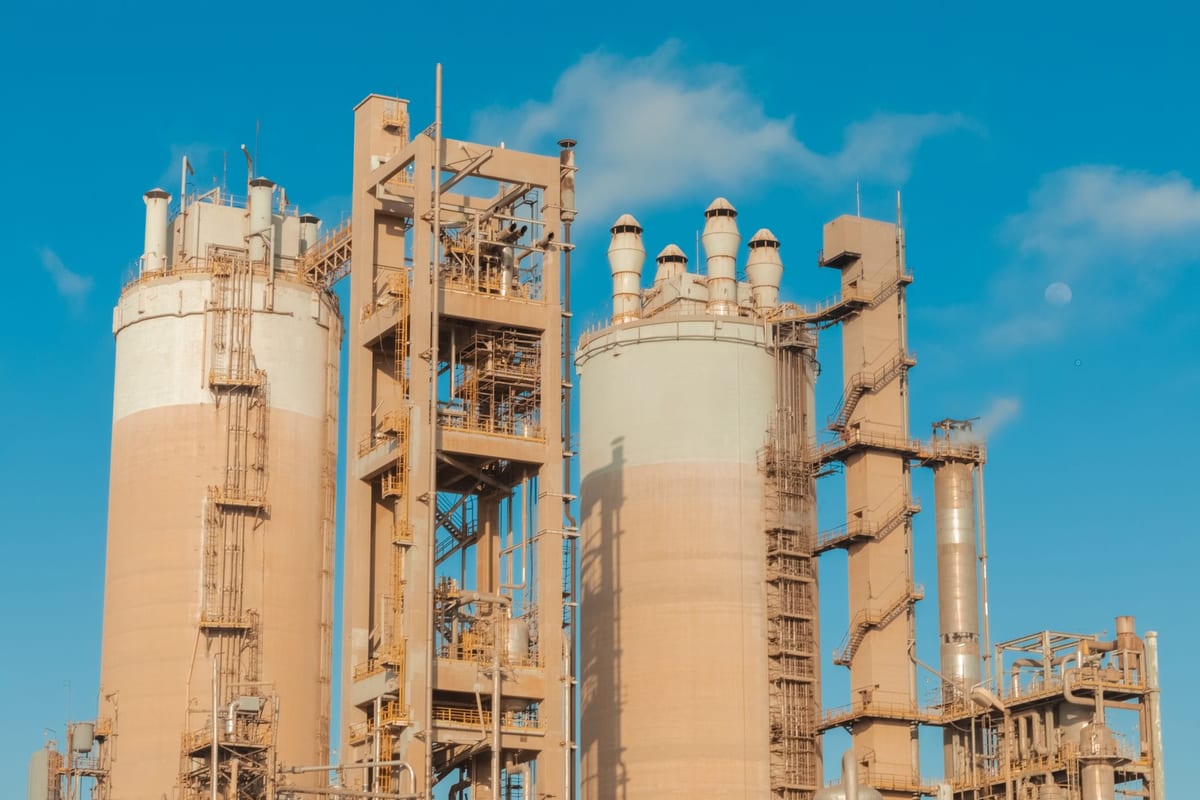
Chemical and process manufacturing sites carry a heavy, daytime-weighted electrical baseload from pumps, agitators, compressors, chillers and increasingly from electric boilers and process heaters that are replacing gas. That load profile lines up closely with the solar generation curve, which is exactly why on-site solar PV works so well here. The wider picture is stronger still: as process electrification accelerates, the share of demand that solar can offset grows year on year, so an array sized correctly today keeps paying back as more of your heat and process load shifts onto electricity. The one thing that sets chemical and process sites apart from a general manufacturing plant is the compliance overlay. DSEAR and ATEX zoning, and sometimes COMAH permitting, shape where equipment can sit and how the connection is planned, and roof loadings are often constrained by existing process plant and pipe bridges. Those are all solvable with the right design, and none of them change the underlying economics, which are driven by your strong, continuous daytime demand.
Sizing solar for chemical and process manufacturing
A typical chemical and process manufacturing installation lands between 200 kW and 700 kW, using roughly 370 to 1,300 panels across 1,200 to 4,000 square metres of roof. In UK conditions a system that size generates around 185,000 to 640,000 kWh a year, which for a daytime-heavy process site is largely self-consumed rather than exported.
We size to your daytime baseload, not to your available roof area. The working rule is to install 70 to 90 percent of peak daytime demand so that almost every unit generated displaces a unit you would otherwise import at full grid price. To get that right we pull at least 12 months of half-hourly meter data and model your load profile shift by shift, rather than working from an annual average that hides the peaks and troughs. On a chemical or process site the presence of existing HV and LV infrastructure often simplifies grid integration, and the constraint tends to be roof and hazardous-area layout rather than electrical capacity.
Costs and payback
A chemical and process installation in this size band typically costs between £155,000 and £620,000 fully installed. Simple payback for the sector runs at around 7 years, a little longer than food or automotive because the compliance overlay and constrained roof access add cost, and because export is a smaller part of the value here. That figure improves markedly where process electrification lifts your daytime demand, because every extra unit of electric heat or process load raises self-consumption and shortens the return.
| Figure | Typical range |
|---|---|
| System size | 200 kW to 700 kW |
| Number of panels | 370 to 1,300 |
| Roof area required | 1,200 to 4,000 square metres |
| Project value (installed) | £155,000 to £620,000 |
| Annual generation | 185,000 to 640,000 kWh |
| Simple payback | Around 7 years |
We model the full return from your own half-hourly data and share the discounted-cash-flow model in full, so your finance team can stress-test it or feed it straight into their own capital-appraisal process.
Compliance and regulation
Chemical and process sites carry compliance requirements that a general manufacturing plant does not, and getting them right at design stage is what keeps a project on programme. The key ones are:
- DSEAR risk assessment is mandatory for any work near hazardous zones. We assess the classified areas before we finalise any layout, so cable routes, inverter positions and roof-access points stay clear of them.
- ATEX-rated equipment may be required where inverters or associated gear sit within a classified area. Where practical we locate inverters outside the zone entirely to avoid the cost and complexity, but where that is not possible we specify ATEX-rated kit to the correct zone.
- COMAH sites, whether upper or lower tier, need notification of major modifications and, where relevant, a safety-case review. We build the notification and review timeline into the project programme from the start so it never becomes a surprise late in delivery.
Alongside the sector-specific rules, the standard manufacturing framework still applies: MCS commercial certification for SEG eligibility, a G99 grid-connection application for any connection above 17 kW per phase, a mandatory roof structural survey before any ballast or rail loading, and SPF1981 fire-safety design, which insurers increasingly treat as a condition of cover. On a chemical site the structural survey matters even more than usual, because roof loadings are frequently constrained by existing process plant and pipe bridges that eat into usable, load-bearing roof area.
A representative project
To show how the figures come together, consider a representative process manufacturer running a continuous daytime operation with a DSEAR-zoned production area and a mix of pumps, compressors and chillers. The site has around 2,400 square metres of usable roof once pipe bridges and rooftop plant are excluded. From 12 months of half-hourly data the modelled fit is a 380 kW array of roughly 700 panels, generating in the region of 350,000 kWh a year. Because the load is daytime-heavy and largely continuous, self-consumption sits high, so most of that generation displaces grid import at the full daytime rate rather than being exported. Inverters are sited outside the classified zone to keep ATEX requirements out of scope, and the grid connection is scheduled into a planned maintenance window so production is not interrupted. On typical sector economics the project sits in the £155,000 to £620,000 band and pays back in around 7 years, with the return tightening further as the site electrifies more of its process heat. These are representative figures grounded in the sector data, not a named client project.
Funding the project
Most chemical and process installs are funded through a power purchase agreement or asset finance rather than from the capital budget, so the array does not compete with production-line investment. Solar PV also qualifies as plant and machinery, so the first £1m of qualifying spend can usually be fully expensed in year one under the Annual Investment Allowance, and energy-intensive sites may already hold a Climate Change Agreement that on-site generation helps against. Larger decarbonisation projects can be eligible for the Industrial Energy Transformation Fund. We map the right combination of grants, allowances and finance for your site as part of the proposal. See grants and funding for the schemes in detail and cost for a full breakdown of pricing and payback.
To move forward, the fastest route is a free desk-based feasibility study from your half-hourly meter data and roof drawings. Get a sized and priced quote within 7 working days, or run your own numbers first with our savings calculator. If a different sub-sector fits your operation more closely, see our pages on solar for pharmaceutical and life sciences manufacturing and engineering and metalworking.
Typical chemical & process manufacturing install
- System size
- 200-700 kW
- Panels
- 370-1,300
- Roof area
- 1,200-4,000 sqm
- Project value
- £155,000-£620,000
- Payback
- 7 years
- Annual generation
- 185,000-640,000 kWh
- Annual CO₂ saved
- 42-147 tonnes
Get a free chemical & process manufacturing quote
Responds within one working day
- 1. Free desk feasibility from your meter data and roof, no obligation.
- 2. Site survey and a fixed-price proposal, itemised in writing.
- 3. Install and aftercare by MCS-certified engineers.
- MCS Certified
- NICEIC
- RECC
- TrustMark
Common questions
What size solar system does a UK chemical or process plant need?
A typical chemical and process installation is 200 kW to 700 kW, using around 370 to 1,300 panels across 1,200 to 4,000 square metres of roof and generating roughly 185,000 to 640,000 kWh a year. Systems are sized to your daytime baseload at 70 to 90 percent of peak daytime demand, so most generation is self-consumed rather than exported.
How do DSEAR and ATEX rules affect a solar installation on a chemical plant?
A DSEAR risk assessment is mandatory for any work near hazardous zones, so classified areas are assessed before the layout is finalised and cable routes, inverter positions and roof-access points are kept clear of them. Where practical, inverters are sited outside the classified zone to avoid ATEX-rated equipment; where that is not possible, ATEX kit is specified to the correct zone.
What is the payback on solar panels for a chemical plant?
Simple payback for the sector runs at around 7 years, a little longer than food or automotive because the compliance overlay and constrained roof access add cost and export is a smaller part of the value here. It improves where process electrification lifts daytime demand, because every extra unit of electric heat or process load raises self-consumption and shortens the return.
Do we need battery storage with our manufacturing solar?
Not for most sites with a daytime-heavy load profile, where self-consumption already maxes out. Battery storage becomes economic where you run significant night shifts, face heavy DUoS red-band charges, or want to trade flexibility in markets such as Dynamic Containment. We model the battery business case alongside the PV so you can see whether it pays.
How much roof area do we need per kW of solar?
Roughly 5 to 6 square metres of roof per kW of installed PV in 2026, using 450W-plus panels in portrait orientation with optimised row spacing. So a 500 kW system needs around 2,500 to 3,000 square metres of unobstructed roof. We run a 3D shading study to confirm, because rooftop plant, parapets and adjacent buildings can reduce usable area significantly.
What roof types can take solar on a manufacturing building?
Almost all commercial roof types: trapezoidal and profiled metal (clip or rail fix), standing-seam metal (clamp fix, no penetration), single-ply membrane (ballasted), built-up felt (mechanically fixed with flashing), and concrete (ballasted). Asbestos-cement roofs cannot be retrofitted with rooftop PV and must be replaced with a modern membrane first.